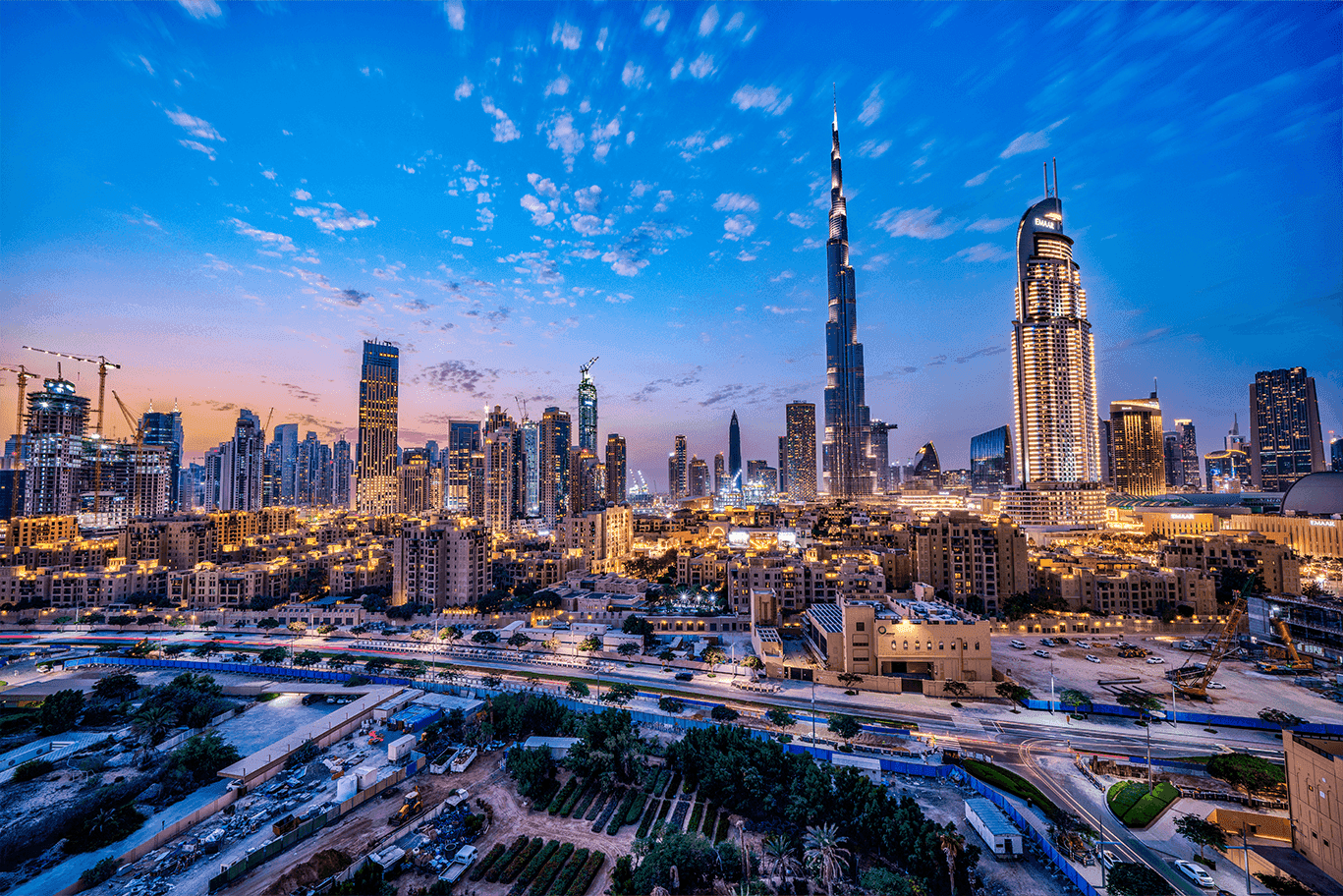
Cost of Living: What the Numbers Look Like
Dubai sits among the 30 most expensive cities globally, and that is felt most sharply in rent. A one-bedroom apartment in a central area such as Downtown or JLT costs between AED 80,000 and AED 130,000 per year. Go further out to Deira or International City and you can find options from AED 35,000 to AED 55,000. Add groceries (AED 1,500 to AED 2,500 a month for a family), private school fees (AED 25,000 to AED 80,000 per child per year), and private health insurance (AED 5,000 to AED 15,000 per person annually), and a family of four in Dubai comfortably spends AED 25,000 to AED 45,000 a month.
Muscat is a different story. A well-maintained one-bedroom apartment in Al Khuwair or Madinat Qaboos runs OMR 300 to OMR 550 a month. A family apartment in Qurum or Shatti Al Qurum might be OMR 700 to OMR 1,000. Grocery bills are 25% to 35% lower than Dubai. School fees are meaningfully cheaper. A family of four in Muscat can live comfortably on OMR 2,500 to OMR 4,000 a month, roughly equivalent to AED 24,000 to AED 38,000 at current exchange rates, but the purchasing power stretches further.
One point worth noting: the Omani Rial (OMR) is pegged to the US dollar at approximately 2.60 USD per OMR, making it one of the highest-valued currencies in the world. The dirham is also dollar-linked at 3.67 AED per USD. Both give you the kind of currency stability that many international buyers seek when relocating from markets with weaker currencies.
Lifestyle and Pace
Dubai runs at full speed, around the clock. The city is dense, ambitious, and socially open. Restaurants stay open past midnight, malls are busiest at 10pm, and networking events happen seven days a week. For people who are driven by a fast urban environment and international business energy, Dubai feeds that drive. The social circle is enormous. In a single week you will meet Arabs, South Asians, Europeans, and Africans from across the globe.
Muscat is quieter and, many residents would say, more livable in the long run. Traffic is light by regional standards. The city is spread out and coastal. Residents describe a pace that is busy enough to be productive but not so relentless that it burns you out. Weekend life often means beaches, hiking in the Al Hajar mountains, or day trips to Nizwa. The social scene is smaller, which can be either a limitation or a relief depending on what you are looking for.
For families with young children, many international residents find Muscat's pace suits family life better. For single professionals or entrepreneurs building a business network quickly, Dubai's density is an advantage.
Climate
Both cities are hot. Dubai summers from June through September reach 42 to 46 degrees Celsius with high humidity. Muscat summers are similar in temperature but less humid along the coast, though July and August can be extremely humid due to the Khareef season in the south.
The difference that matters most is the winter. Dubai winters from November through March are ideal: 18 to 28 degrees, low humidity, evenings that allow outdoor dining every night. Muscat winters are comparable, perhaps a degree or two warmer. Salalah in southern Oman has a distinct monsoon season in July and August that makes it unusually green and temperate.
Neither climate is fundamentally better or worse. Both are tolerable year-round for people who stay mostly indoors during peak summer. If outdoor lifestyle matters to you, Dubai offers more outdoor spaces and events designed for the cooler months.
Expatriate Community and Connectivity
Dubai has one of the most diverse and largest expatriate communities in the world. Residents from across the Middle East, South Asia, Europe, and Africa all have established communities in the city. International grocery stores, multilingual doctors, and culturally diverse social circles are all easy to find. For people relocating internationally for the first time, the existing community substantially reduces the adjustment period.
Muscat's international community is smaller but growing. The city attracts a mix of Gulf nationals, South Asian workers, and expatriates from Europe and the wider Middle East. The social scene is more intimate, and the city's coastal setting makes it popular with families who value a calmer environment. Direct air connections run to most regional capitals and major European hubs.
Oman's neutral foreign policy stance and longstanding diplomatic relationships across the region make it a stable base for professionals who operate across the Gulf and beyond. This geopolitical stability is a practical consideration for residents who travel frequently for business.
Schooling and Healthcare
Dubai has over 200 private schools offering British, American, IB, and Indian curricula. The British and American-curriculum schools are particularly popular with international families because credits transfer globally. Top schools like GEMS Wellington, Repton, and Dubai College have waiting lists, and fees range from AED 25,000 to AED 80,000 per year. Healthcare in Dubai is private and high quality, genuinely on par with private hospitals in Europe, but costs are also high. A specialist consultation runs AED 400 to AED 900, and health insurance is recommended.
Muscat's private schooling options have grown significantly. The British School Muscat, ABA (American British Academy), and several Indian-curriculum schools all serve expatriate families well. Fees range from OMR 3,000 to OMR 9,000 per year, which is lower in both nominal and real terms. Muscat's hospitals including Aster and Badr Al Samaa deliver solid care. For complex procedures, some residents still travel to Dubai or abroad.
For families with school-age children, both cities cover the essentials well. Dubai has more choice at the top end. Muscat offers quality at a more accessible price point.
Residency and Visa Pathways
In Dubai, foreign nationals most commonly obtain residency through employment, company formation where you sponsor yourself as a business owner, or property purchase. Since 1 May 2026, a sole owner of a completed property with a title deed qualifies for a renewable two-year investor visa at any property value, replacing the old AED 750,000 floor. Joint owners each need a share of at least AED 400,000. The Golden Visa, available for property of AED 2 million or more, gives a 10-year renewable residence permit.
Oman's residency pathways work similarly. A business owner or investor can obtain an investor visa. Owners of residential units in designated integrated tourism complexes such as Muscat Hills, Al Mouj (formerly The Wave) and Saraya Bandar Jissah can apply for a renewable two-year property-owner visa, with a Royal Oman Police fee of OMR 50 and no minimum value listed. The separate Golden Residency starts from OMR 200,000 for 10 years.
One meaningful distinction: Oman has no personal income tax today (a 5 percent tax above OMR 42,000 starts on 1 January 2028), a comparatively lower barrier to starting a business, and lower running costs overall. The UAE introduced a 9% corporate tax in 2023 on profits above AED 375,000, though free zone entities meeting qualifying conditions are still exempt. For entrepreneurs building early-stage businesses, Oman's cost structure can be advantageous.
Alsama's team handles all residency paperwork and company formation in both countries. You do not need to navigate two bureaucracies alone.
Safety and Stability
Both Oman and the UAE rank among the safest countries in the world. Crime rates are extremely low. Muscat regularly appears in global surveys as one of the safest cities for expatriates, with a particular reputation for low street crime. Dubai is equally safe in practice, though its much higher population density means isolated incidents are statistically more likely.
Political stability in both countries is strong. Oman's foreign policy is among the most neutral in the region. The country has acted as a diplomatic back-channel between Western powers and various regional parties on multiple occasions. The UAE is a close US ally with a different strategic orientation. For international residents who weigh geopolitical factors when choosing where to live, each country's orientation is worth understanding.
Millions of expatriates have built secure, long-term lives in both countries. But understanding each destination's political character is a reasonable part of the due diligence any family or professional should do.
Who Each Destination Suits
Dubai suits you if: you are a single professional or entrepreneur who benefits from a fast business network; you are raising children and want maximum school choice and international curriculum options; you already have family or close friends in Dubai; you work in finance, logistics, tech, or international trade where proximity to a global hub matters; or you want a larger property investment with strong rental yield potential, as Dubai residential yields typically run 5% to 8%.
Oman suits you if: you are a family that values a quieter, lower-pressure environment; your budget is tighter and you want genuine value for money without compromising on quality; you are building a business and want to keep costs down in the early years; you travel regionally and want shorter flights and fewer complications; or you are looking for property investment in a market that is still early-stage and carries meaningful upside, as Muscat residential property prices have risen steadily since 2021.
Many buyers we work with do not treat this as a binary choice. They establish a company or buy property in one country first, build the residency, and then reassess. Starting with Oman is often the lower-risk, lower-cost entry point. Starting with Dubai puts you in a larger market from day one. Alsama works in both, so we give you an honest read on which fits your situation rather than steering you to one side.